
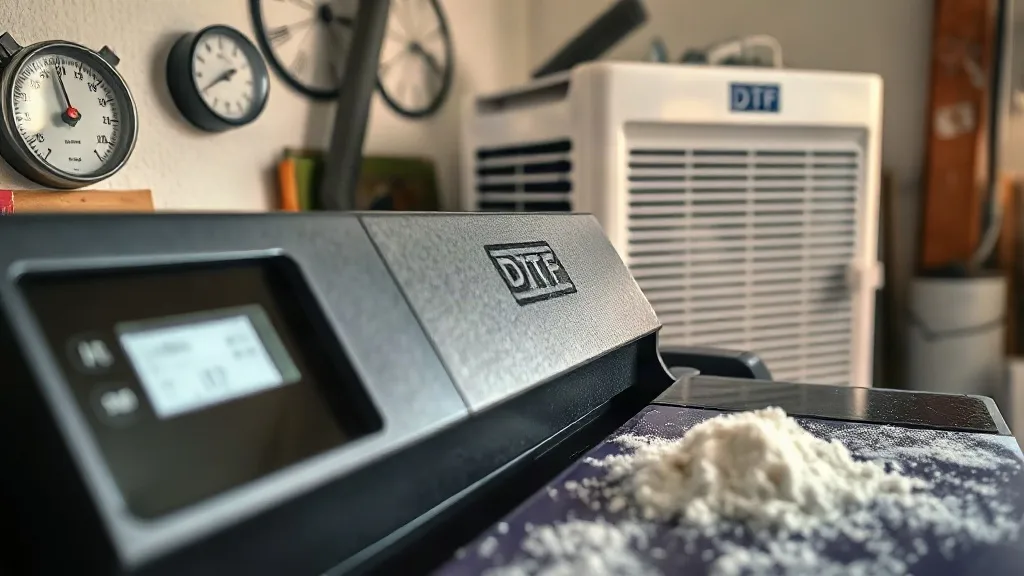
If you have ever pulled a dtf transfers sheet from its packaging and watched the powder clump like wet sand, you have met humidity. It is the invisible variable that turns a perfect print into a fuzzy, cracked mess. While most operators focus on press settings and ink profiles, the moisture hanging in the air can undo all that careful work. In this guide, we will look at why humidity matters, how it sabotages each stage of the DTF process, and what you can do to keep your shop running smoothly even when the weather refuses to cooperate.
Why Humidity Is a Big Deal in DTF Printing
DTF printing relies on a delicate balance of materials: film, ink, and adhesive powder. Each of these components interacts with moisture in the air. When relative humidity climbs above 60%, the adhesive powder, which is hygroscopic, starts absorbing water vapor from the air. The result is a sticky, clumpy powder that refuses to flow evenly. Meanwhile, the film itself can absorb moisture and warp, and the ink may not cure properly. Even the dtf transfer process, which seems straightforward, becomes unpredictable. If you have ever wondered why your prints look great on a dry day and terrible on a rainy one, humidity is likely the culprit.
How Moisture Affects Each Stage of the DTF Process
Film Handling and Storage
PET film used in DTF is not completely impervious to moisture. When exposed to high humidity, the film can absorb water, leading to curling, wrinkling, and even static buildup that attracts dust. A curled sheet will not lay flat on the printer platen, causing uneven ink deposition. Worse, if the film is stored in a damp environment, the coating that holds the ink may degrade, leading to poor ink adhesion and transfer failures. Always store film in a sealed bag with a desiccant packet, and let it acclimate to room temperature before printing.
Ink and Powder Interaction
DTF ink is water-based, so it is already sensitive to environmental conditions. In high humidity, the ink may not dry completely during the printing phase, leaving a tacky surface. When you apply the adhesive powder, it clings to the wet ink but also absorbs moisture from the air. This leads to uneven powder distribution, which translates to weak adhesion and a grainy feel on the final print. Moreover, if the powder is damp, it will not melt uniformly during the curing stage, resulting in patches that peel or crack after washing.
Curing and Melting
The curing step is where the powder melts and fuses with the ink. If the powder has absorbed moisture, the melting point changes, and you may need to increase the temperature or time to achieve a proper cure. However, over-curing can cause the film to shrink or the ink to become brittle. The key is to control the environment, not to compensate with heat. A hygrometer is a cheap investment that can save you from costly reprints.
Signs That Humidity Is Ruining Your Prints
Not sure if humidity is your problem? Look for these telltale signs:
- Powder clumps in the container or on the film after shaking.
- Prints that feel gritty or textured after curing.
- Transfers that peel or crack after the first wash.
- Film that curls at the edges or sticks to itself.
- Inconsistent color vibrancy, especially in white areas.
- Excessive static shocks when handling film.
If you notice any of these, check your shop's humidity levels. A simple digital hygrometer can tell you if you are in the danger zone.
Practical Solutions to Control Humidity
Monitor and Regulate Your Environment
The ideal relative humidity for DTF printing is between 40% and 60%. Invest in a dehumidifier for your print room, especially if you live in a humid climate. Keep doors and windows closed during humid days, and use air conditioning to dry the air. Avoid placing your printer near sources of moisture like sinks or open windows.
Proper Storage Techniques
Store film in its original packaging or in airtight containers with silica gel packs. Keep powder in a sealed container and only dispense what you need for the day. If you buy powder in bulk, divide it into smaller airtight jars to minimize exposure. For dtf transfers near me that you purchase pre-printed, store them in a cool, dry place away from direct sunlight.
Handle Film with Care
Before printing, let film acclimate to the room temperature in its sealed bag. This prevents condensation from forming on the surface. If film feels damp, you can gently warm it with a heat gun on low setting or place it in a dehydrator at low temperature for a few minutes. Never use a household oven, as temperature control is poor.
Adjust Your Workflow
On particularly humid days, reduce the amount of powder you apply and increase curing time slightly. Use a powder shaker that dispenses a fine, even layer. After curing, inspect prints for any signs of moisture-related defects before pressing. If you are doing dtf transfers for clients, consider adding a desiccant packet to each shipment to protect the prints during transit.
Long-Term Prevention: Building a Humidity-Proof Shop
If you are serious about DTF printing, make humidity control part of your standard operating procedure. Here are some steps to take:
- Install a hygrometer and log humidity levels daily.
- Use a dehumidifier sized for your room.
- Seal gaps around doors and windows.
- Store all materials in airtight containers.
- Train staff to recognize and report humidity issues.
- Keep a backup supply of powder in small, sealed packets.
These measures might seem excessive, but they pay off in reduced waste and consistent quality.
Frequently Asked Questions
Can I print DTF transfers in a humid climate without a dehumidifier?
It is possible but risky. You can try to mitigate by storing materials in airtight containers and working quickly, but a dehumidifier is the most reliable solution. For occasional printing, you might get by with careful handling, but for consistent results, invest in one.
How do I know if my powder has absorbed moisture?
Damp powder will feel clumpy and may stick to the sides of the container. When you shake it, it won't flow freely. You can also test by applying a small amount to a scrap piece of film and curing it; if it doesn't melt smoothly, moisture is likely the issue.
What is the ideal humidity for DTF printing?
Aim for 40% to 60% relative humidity. Below 40% can cause static, while above 60% invites moisture problems.
Can I dry out damp powder?
You can try spreading it thinly on a baking sheet and warming it in an oven at low temperature (around 150°F) for a short time, but this is not recommended as it can alter the powder's properties. Prevention is better.
Does humidity affect the durability of DTF transfers after washing?
Yes. If moisture is present during production, the adhesive bond may be compromised, leading to premature peeling or cracking after washing. Proper humidity control ensures a strong, lasting bond.