
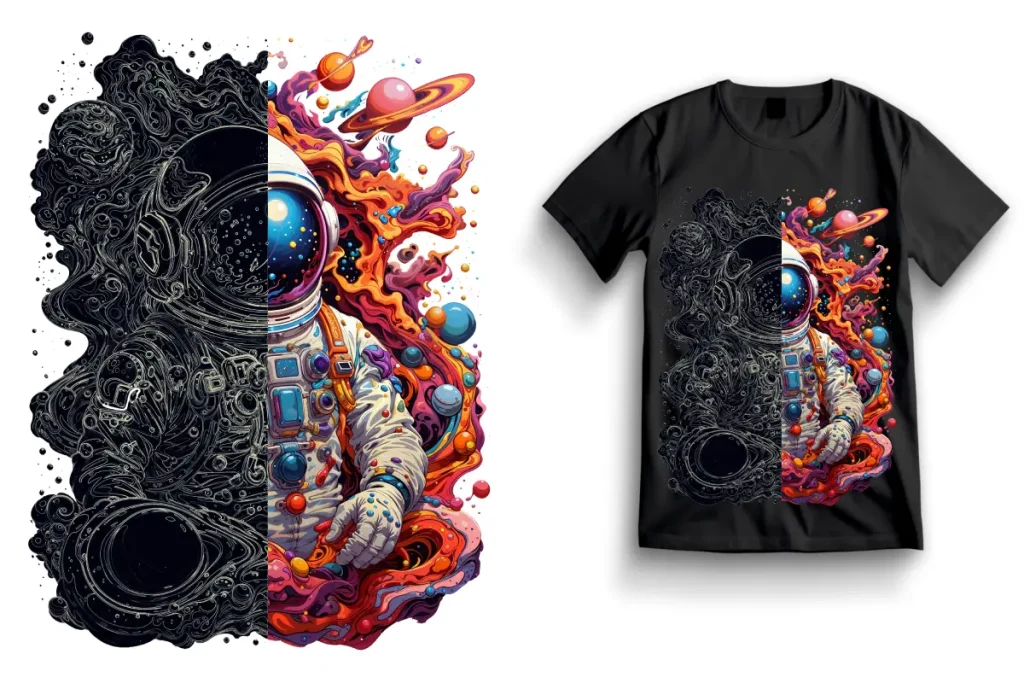
The apparel printing industry is experiencing an unprecedented shift, forcing small businesses and large production houses alike to rethink their traditional methods. For years, screen printing and vinyl weeding dominated the market, but they came with massive setup times, high minimum order quantities, and endless physical labor. Today, high-quality dtf transfers have emerged as the ultimate alternative, completely streamlining how custom designs are brought to life. Direct-to-film technology bypasses the traditional bottlenecks of garment decoration, providing crisp details, vibrant color accuracy, and exceptional durability. Whether you are building an independent streetwear brand or managing massive corporate merchandise accounts, understanding how to leverage modern DTF applications is the key to scaling your production efficiently.
The Chemistry of Direct-to-Film: Why the Industry is Shifting
To truly appreciate the value of this decoration method, it helps to look at the engineering that happens on the film sheet. Unlike older heat transfer methods that relied on thick, rubbery plastisol or rigid vinyl layers that crack after a few trips through the washing machine, direct-to-film prints utilize an ultra-thin, highly flexible pigment ink stack. This ink stack is backed by a specialized hot-melt polyurethane adhesive powder that acts as a structural bridge, melting deep into the microscopic gaps between fabric fibers during the application process.
This molecular bond provides a remarkably soft hand feel that moves naturally with the garment rather than feeling like a stiff plastic shield stuck to the fabric. Because the adhesive layer remains flexible after curing, finished garments boast incredible mechanical stretchability. You can pull, twist, and flex the fabric without causing micro-fracturing or edge peeling. Additionally, because the entire system is completely digital, you can execute complex photographic imagery, subtle drop shadows, and delicate gradients on both light and dark garments with identical ease.
Fabric Compatibility: Breaking the Barriers of Traditional Printing
One of the biggest frustrations in custom garment decoration is fabric limitation. Screen printing inks require specific high-temperature curing environments that can easily scorch delicate synthetic performance wear, while direct-to-garment systems struggle to maintain opacity on anything other than 100 percent cotton. Shifting your operational workflow to commercial-grade dtf transfers removes these creative and technical barriers completely, providing a universal decoration method that bonds flawlessly to a diverse range of textiles, including:
- Premium ring-spun cotton, heavyweight fleece, and organic canvas
- 100 percent performance polyester and athletic moisture-wicking jerseys
- Rugged nylon windbreakers, technical outerwear, and synthetic satins
- Heavyweight cotton-poly blends, denim fabrics, and structured caps
This wide-ranging compatibility allows custom apparel businesses to diversify their product catalogs instantly. You can offer comprehensive corporate merchandise packages that span from basic promotional t-shirts to premium weather-resistant uniform jackets using the exact same print source, ensuring absolute brand consistency across different material types.
The Geographic Advantage: The Power of Local Supply Networks
In the print-on-demand era, delivery delays are the ultimate profit killer. Waiting days or weeks for an overseas shipment to arrive can damage client relationships, disrupt your internal workflow, and cause you to miss tight event deadlines entirely. Forward-thinking business operators mitigate this operational risk by actively searching for premium dtf transfers near me to establish a reliable, regional supply chain. Partnering with an expert regional facility ensures that you can rapidly restock your workspace, inspect physical print proofs before running a large production batch, and maintain tight control over your delivery promises.
If you are looking to secure the absolute best dtf transfer at Houston commercial print facilities can deliver, you must look closely at the underlying machinery your supplier utilizes. True retail-grade prints require industrial wide-format printers equipped with automated white ink agitation systems. This constant internal circulation prevents the heavy titanium dioxide pigments found in white ink from settling, which guarantees a completely opaque white background layer that locks out fabric dye migration and keeps your top-layer colors looking incredibly bright and true to your original digital files.
The Gang Sheet Blueprint: Multiplying Your Daily Profit Margins
Maximizing profit margins in a competitive market requires careful material management and strategic layout planning. Relying on single-image cutouts leaves money on the table due to excessive media waste and increased handling times. Industry experts avoid this bottleneck by utilizing a high-yield Houston dtf transfer configuration known as a gang sheet. This formatting method allows you to combine dozens of different designs, left-chest logos, custom neck sizing labels, and sleeve graphics onto a single continuous roll of film.
By filling up every spare inch of printable space across the film width, you drastically lower your baseline cost per print. This technique is highly effective when managing diverse corporate orders where multiple logos of varying sizes must be produced simultaneously. It transforms your daily workflow, allowing you to fulfill small-batch custom requests at a price point that remains highly attractive to your customers while preserving a healthy bottom line for your business.
The Master Pressing Protocol: How to Achieve Flawless Wash Durability
Even the highest-grade film sheets will fail to yield professional results if your heat press execution is flawed or inconsistent. Achieving a permanent, commercial-grade bond requires balancing temperature, pressure, and time variables perfectly. Follow this step-by-step master guide to guarantee your custom prints never fail in the wash:
- The Moisture Purge: Position your blank apparel onto the lower platen of your press and clamp it down for 6 to 8 seconds. This critical step drives out trapped ambient humidity within the fabric fibers and flattens out deep creases, setting up an ideal surface for the hot-melt adhesive.
- Precision Alignment: Position your custom film sheet carefully over the garment, ensuring the powder-coated, matte side is resting directly flat against the textile face.
- The Primary Fuse: Apply heavy, even pressure (55 to 60 PSI) at a temperature ranging between 290°F and 315°F (143°C to 157°C). Maintain this solid press for exactly 12 to 15 seconds.
- The Cooling Window: If you are working with standard cold-peel film formulations, remove the garment from the press and let it rest until the film surface returns completely to room temperature. Peeling the carrier sheet while it is still warm can tear the curing ink layer.
- The Finishing Seal: Place a piece of premium parchment paper or a textured silicone sheet directly over the freshly exposed design and press for a final 5 seconds. This secondary press drives the edges deep into the fabric weave, creating a smooth finish and eliminating any unnatural plastic gloss.
Frequently Asked Questions About Professional Fabric Films
Why do some direct-to-film prints develop bubbles or texture issues after pressing?
Texture defects or bubbling usually indicate that moisture was trapped within the garment before application, or that the adhesive powder was not fully cured during the initial manufacturing stage. Always ensure you perform a thorough pre-press to dry out the fabric completely, and double-check that your heat press platens are delivering uniform heat across the entire surface area without cold spots.
Can I safely utilize a standard home iron for retail-bound apparel orders?
While a home iron can work for basic craft projects or temporary prototype samples, it is highly discouraged for commercial retail inventory. Home irons cannot distribute heavy, uniform downward pressure or maintain the precise, constant temperatures required to properly melt industrial thermoplastic powder. To ensure your designs can withstand dozens of washes, a professional pneumatic or heavy-duty manual heat press is required.
What specific graphic file formats yield the sharpest edges on film?
For pristine typography and perfectly clean graphic borders, you should always submit your artwork using uncompressed vector file formats such as PDF, EPS, or SVG. If you are printing raster artwork like complex digital illustrations or photographs, make sure the file is exported with a minimum resolution of 300 DPI at the exact size you want it printed, featuring a 100 percent transparent background with no stray pixel halos.
How should end consumers wash these garments to preserve print vibrancy?
To maximize the operational life of the print, customers should turn the apparel inside out before washing to reduce surface friction. Use cold water cycles, mild laundry detergents, and completely avoid aggressive chlorine bleaches or heavy fabric softeners. For drying, hanging the garments to air dry or utilizing low-temperature tumble settings will keep the graphics looking brand new for years.
Scaling your brand requires a production partner that understands the vital balance between flawless print accuracy and fast operational turnaround. By aligning your business with the advanced manufacturing standards at Harwin DTF, you gain access to vibrant color reproduction, heavy-duty wash resilience, and dependable regional support engineered to keep your shop running efficiently through every high-volume season.