
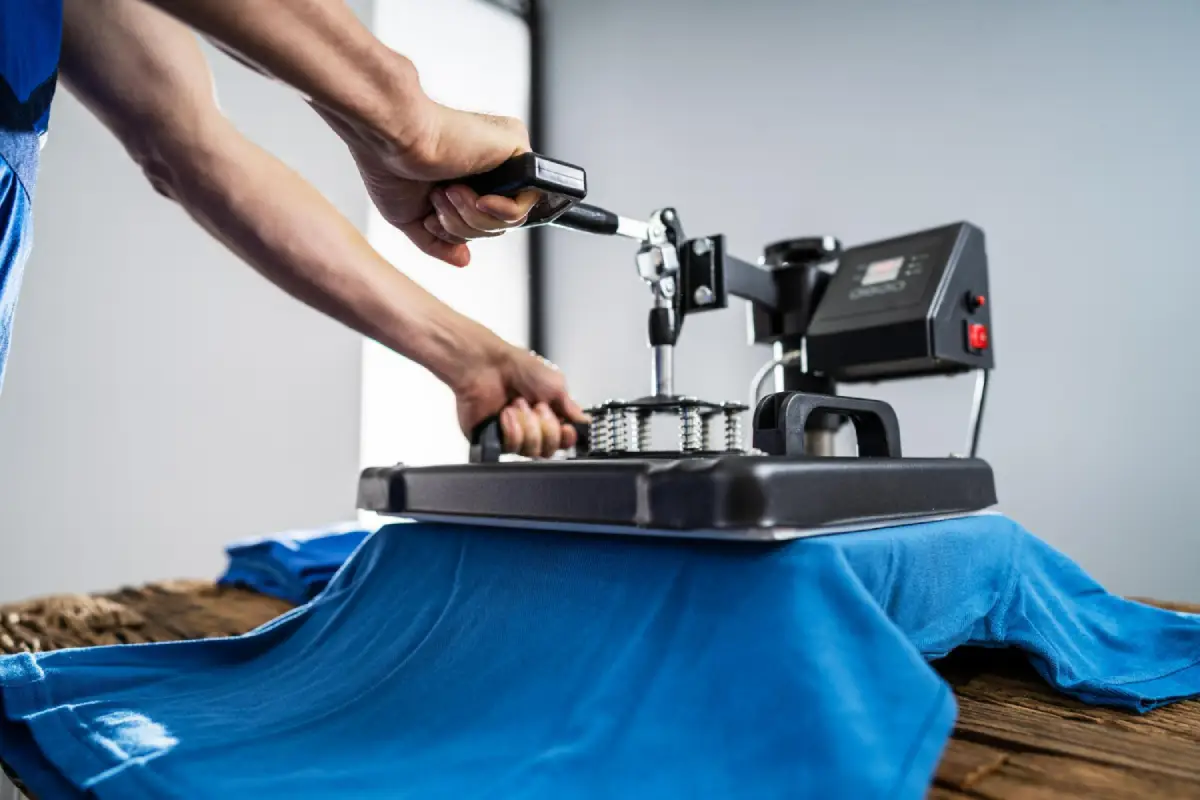
The apparel decoration sector is often viewed through a creative lens, but for those aiming to build a sustainable, scalable brand, it must be viewed as an **industrial systems problem**. Many print shops fail to achieve high-margin status because they focus on the "visuals" while ignoring the "mechanical reality" of the dtf process. If you want to stop competing on price and start competing on quality, you need to transition your workflow from a "shop" to an "engineering hub."
The hallmark of premium retail apparel is not just the clarity of the graphic, but the permanence of the bond. When you use dtf transfers, you are essentially engineering a chemical bridge between a polymer ink and a textile surface. If that bridge is poorly constructed, the garment’s lifespan is short. True brand leaders don't just "print"; they manage the thermomechanical interaction between their consumables and their textiles.
The Production Ecosystem: Managing Variables
Most production failures are not random—they are the result of uncontrolled environmental variables. To achieve "Elite-Tier" consistency, your studio must manage the three pillars of production:
- Atmospheric Governance: The TPU adhesive powder is naturally hygroscopic. Storing it in an environment with high ambient moisture will lead to "pinhole" defects. Use climate-controlled storage to maintain powder integrity.
- Mechanical Precision: Pressure is not a subjective feeling. It is a measurable force. Using a press that allows for digital PSI calibration is the only way to ensure the adhesive penetrates the fabric weave at a molecular level.
- Thermal Sequencing: The cooling phase is where the structural integrity is locked in. Rushing this step is the fastest way to invite micro-tears in the graphic over time.
Supply Chain Velocity: The Power of Proximity
Scaling a brand requires capital. When you hold thousands of dollars in pre-printed inventory, that capital is trapped in boxes in your warehouse. A "Just-In-Time" (JIT) production model is the antidote to this risk. By utilizing a dtf transfers near me strategy, you align yourself with a regional production partner who functions as your own R&D and manufacturing wing.
This agility allows you to test new finishes—such as matte-poly, ultra-stretch, or metallic additives—without the overhead of industrial printing hardware. Your local partner handles the "printing science," while you focus entirely on brand identity and customer acquisition. This symbiosis is how boutique brands manage to operate with the output capacity of national retailers while retaining the creative speed of a local studio.
Establishing Institutional Quality Governance
If your quality is tied to the memory or skill of one person, your business has a "glass ceiling." To break through, you must externalize your knowledge into a **Standard Operating Procedure (SOP) Ledger**. This document should serve as the source of truth for your team, containing the exact PSI, thermal profiles, and cooling times for every SKU in your catalog.
Furthermore, adopt a "Failure Analysis" mindset. When a garment is returned due to a print issue, treat it as a data acquisition opportunity. Did the print lift? That’s a PSI or moisture issue. Did the surface crack? That’s a curing or adhesive compatibility issue. By turning every error into a data point, your production system grows more resilient every single week. When you possess the data to prove your durability, you earn the right to charge premium prices—moving you firmly out of the "custom shop" commodity race.
Frequently Asked Questions
Why does "pre-pressing" garments change my results?
Pre-pressing removes the residual humidity trapped in the textile fibers. If this moisture remains, the sudden heat of the press turns it into steam, creating a microscopic barrier that prevents the transfer adhesive from ever touching the fibers, leading to a weak, surface-level bond.
How do I identify a transfer provider who meets Harwin’s quality standards?
When searching for dtf transfers near me, look for shops that provide transparency regarding their curing parameters. An elite provider will be happy to share their curing oven logs and offer samples that showcase high stretch-and-recovery without any surface cracking.
Is DTF better for high-end synthetic sportswear?
Yes, but you must avoid the high-heat trap. Synthetic fabrics (like polyester and nylon) have a lower melting point. Use a specialized low-temp adhesive powder and perform "temperature gradient testing" to find the maximum bond strength without damaging the fabric fibers.
What is the most effective way to protect delicate, heat-sensitive fabrics?
Use a "Thermal Buffer" approach. Place a high-density silicone mat or an extra sheet of Teflon between the garment and the press. This slows down the energy transfer rate, protecting the surface fibers from scorching while allowing sufficient energy through to fully melt the transfer adhesive.
Building a successful, high-quality apparel brand is a journey of continuous technical refinement. By mastering the potential of dtf, you position your brand to compete at the highest level of the custom merchandise market. Harwin is committed to providing the industry insights you need to turn your production floor into a professional, profitable enterprise. Start optimizing your workflow today—your commitment to quality is the most valuable investment you can make for your brand's future.