
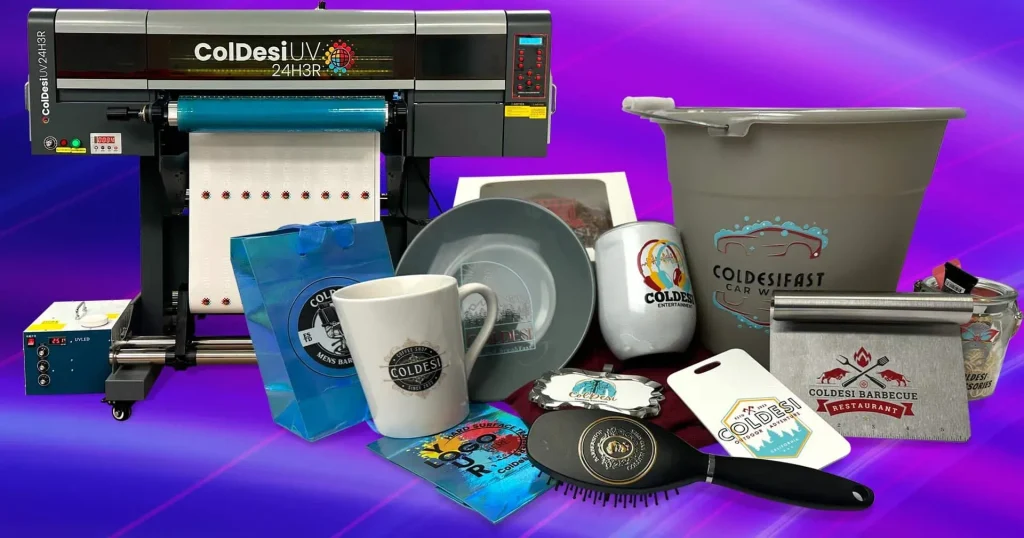
In the ever-evolving landscape of printing technology, **UV DTF printing** stands out as an innovative solution that bridges the gap between traditional methods and modern demands. As businesses lean towards efficiency and high-quality outputs, the adoption of UV DTF printing has surged, offering unique advantages over methods like screen printing and direct-to-garment (DTG) printing. This advanced technique uses ultraviolet-curable inks, ensuring vibrant, durable designs that can be applied to a wide range of materials. With its ability to deliver intricate graphics and vivid colors—including white ink on dark surfaces—UV DTF printing addresses the limitations of conventional printing methods. In this article, we will explore the strengths and weaknesses of UV DTF printing compared to traditional printing techniques, helping you navigate the best choice for your specific project needs.
Also known as Ultraviolet Direct To Film, **UV DTF printing** revolutionizes the printing process by employing cutting-edge technology to achieve superior print quality. Unlike traditional techniques such as screen printing and DTG, UV DTF utilizes UV light to cure inks instantly upon application, facilitating a swift and efficient workflow. This modern printing approach is perfect for those looking for versatility across substrates, from textiles to rigid materials. Furthermore, it tackles common challenges faced by conventional printing methods, like achieving vibrant designs on darker surfaces. In this discussion, we will compare and contrast the benefits of UV DTF printing against more established printing methods, offering insight into their respective applications.
Understanding UV DTF Printing Technology
UV DTF printing, or Ultraviolet Direct To Film printing, has rapidly gained traction due to its innovative approach to high-quality image production. By utilizing UV-curable inks, this technology captures vibrant colors and intricate designs that can be transferred onto various materials, including textiles, glass, and metal. This adaptability not only broadens the range of applications but also enhances the visual appeal of printed items, making it a premier choice for businesses aiming to stand out in competitive markets.
The process begins with printing designs onto a special film, which is then cured by ultraviolet light, solidifying the inks almost instantly and ensuring sharp details. This technology is particularly beneficial for printing on darker materials, as it allows for the effective use of bright white inks. Consequently, businesses looking to produce striking, high-definition graphics find UV DTF printing to be more advantageous compared to traditional printing methods, which may struggle to achieve similar results.
Comparative Analysis of Traditional Printing Methods
Traditional printing methods, such as screen printing and direct-to-garment (DTG) printing, have been industry standards for decades. Screen printing utilizes a stencil-based approach, where ink is pushed through a mesh, which is particularly effective for large batches requiring solid color designs. This method is favored for its efficiency and cost-effectiveness in producing consistent output over high volumes, making it ideal for bulk orders.
On the other hand, DTG printing employs inkjet technology to apply designs directly onto fabric, catering to smaller runs and allowing for detailed, multi-colored graphics. While traditional methods have proven effective, they often lack the versatility of UV DTF printing. As advancements in printing technology continue to evolve, traditional techniques are being challenged by the growing demand for quicker turnaround times and increased design complexity.
Quality Comparison: UV DTF vs. Traditional Methods
Quality is a key differentiator between various printing methods, and UV DTF printing excels in producing images with unparalleled vibrancy and detail. The curing process of UV inks enhances color saturation and allows for precision in graphics. Studies indicate that UV DTF printing results in higher image quality, making it particularly appealing for businesses that require eye-catching promotional materials or intricate designs that must retain clarity.
In contrast, traditional methods like screen printing and DTG printing offer satisfactory quality albeit in limited contexts. While they excel in specific applications, such as creating bold designs on light-colored fabrics through screen printing, they may not achieve the same level of fidelity for intricate or multi-colored images as found in UV DTF printing. For companies focused on visual impact, understanding these differences is vital when choosing a method that aligns with their branding needs.
Evaluating Speed and Production Efficiency
When it comes to production speed, UV DTF printing generally provides significant advantages. This technology allows for faster setup times and requires less manual labor, leading to expedited production timelines particularly beneficial for small to medium-sized orders. Businesses with tight deadlines can find a reliable solution in UV DTF printing, which not only meets their demands but enhances operational efficiency.
However, traditional printing methods, particularly screen printing, become more advantageous with larger production volumes. The efficiency of screen printing increases as setups benefit from bulk production, making it a cost-effective option for businesses that regularly produce large quantities. Understanding the balance between speed and production efficiency is essential for organizations to choose the right method tailored to their specific order size and urgency.
Environmental Impact of Printing Methods
As sustainability practices gain importance in industrial operations, the environmental impact of printing methods becomes a focal point for decision-making. UV DTF printing employs inks that generally emit fewer volatile organic compounds (VOCs), positioning it as a more eco-friendly choice compared to some traditional printing inks. This advantage aligns UV DTF with the growing consumer demand for environmentally responsible production processes.
Traditional printing methods are also evolving, with many adopting eco-friendly inks and processes that reduce waste and emissions. Screen printing, for example, has seen advancements that allow the use of sustainable materials, furthering its appeal in a marketplace where sustainability is increasingly critical. By comparing the eco-friendliness of both methods, businesses can align their printing choices with corporate social responsibility goals.
Cost Considerations for Businesses Choosing Printing Methods
Cost is often a determining factor in choosing a printing method, and it varies significantly between UV DTF and traditional printing techniques. While UV DTF printers entail a higher initial investment, the long-term savings from reduced material waste and time efficiency can lead to greater profitability. Many companies find that the rapid returns on investment from improved productivity help offset the costs associated with adopting this modern printing technology.
Conversely, traditional methods like screen printing may present lower costs per unit for bulk orders, making them an attractive option for businesses with budget constraints. This approach is particularly useful for brands that frequently conduct large-scale runs and need to maintain tight financial oversight. Ultimately, the choice between UV DTF and traditional printing will depend on specific production needs, order sizes, and budgetary constraints.
Frequently Asked Questions
What are the main differences between UV DTF printing and traditional printing methods like screen printing?
UV DTF printing offers a modern alternative to traditional printing methods such as screen printing. Unlike screen printing, which uses mesh screens and is best for solid colors, UV DTF printing utilizes UV-curable inks to achieve vibrant, high-definition images that can be transferred to various surfaces, including textiles and rigid materials. This technology allows for brighter colors, especially on dark materials.
Why choose UV DTF printing over DTG printing for my projects?
Choosing UV DTF printing over direct-to-garment (DTG) printing can provide several advantages. UV DTF technology allows for printing on a broader range of substrates, including metal and glass, whereas DTG is limited mainly to fabrics. Additionally, UV DTF printing produces more vivid and detailed images due to its curing process, making it an excellent option for bold designs.
Is UV DTF printing more environmentally friendly compared to traditional printing?
Yes, UV DTF printing is often considered more environmentally friendly than traditional printing methods. The UV-curable inks used in UV DTF emit fewer volatile organic compounds (VOCs) during the curing process, which reduces environmental impact. Traditional printing is advancing toward sustainability as well, but UV DTF typically offers a greener alternative.
How does the cost efficiency of UV DTF printing compare to screen printing?
While UV DTF printing may have a higher initial investment for equipment, it can lead to cost savings in the long run due to reduced material waste and quicker turnaround times. In contrast, screen printing is often more cost-effective for large volume orders. Ultimately, the more economical choice depends on the specific project requirements, such as order volume and design complexity.
What types of designs work best with UV DTF printing compared to traditional methods?
UV DTF printing is ideal for intricate designs involving multiple colors and fine details, making it a superior choice for projects requiring high-definition prints. Conversely, traditional methods like screen printing excel with designs that feature solid colors and large print runs, where the simplicity of the design maximizes efficiency.
Can UV DTF printing handle small orders efficiently compared to traditional printing?
Yes, UV DTF printing is particularly efficient for small to medium-sized orders due to its fast setup times and reduced labor costs. This contrasts with traditional printing methods, which may be slower and more costly for smaller batches, making UV DTF a better option for businesses with varying order sizes.
| Key Point | UV DTF Printing | Traditional Printing |
|---|---|---|
| Technology and Process | Uses UV-curable inks on special film, producing vibrant colors and designs. | Includes methods like screen printing and DTG, ideal for specific contexts. |
| Quality and Versatility | High-quality images with vibrant colors on a variety of substrates. | Excels in solid colors for large print runs, may lack flexibility. |
| Speed and Production Efficiency | Faster setup and production for small to medium orders. | Efficient for large volumes but slower in setup time. |
| Environmental Impact | More eco-friendly with lower VOC emissions from UV inks. | Advancements in sustainable practices but still more traditional. |
| Cost Analysis | Higher initial investment but savings in material and time efficiency. | Lower cost per unit for bulk orders, viable for budget-conscious businesses. |
Summary
UV DTF printing is emerging as a revolutionary option in the world of printing, showcasing a blend of speed, quality, and versatility that traditional methods struggle to match. While traditional printing techniques like screen printing and DTG have their own set of advantages, particularly for larger orders, the ability of UV DTF to print on a diverse range of substrates with vibrant, intricate designs positions it as a formidable alternative. As businesses continue to prioritize efficiency and sustainable practices, UV DTF printing stands out as a method that not only meets but exceeds contemporary printing demands.