
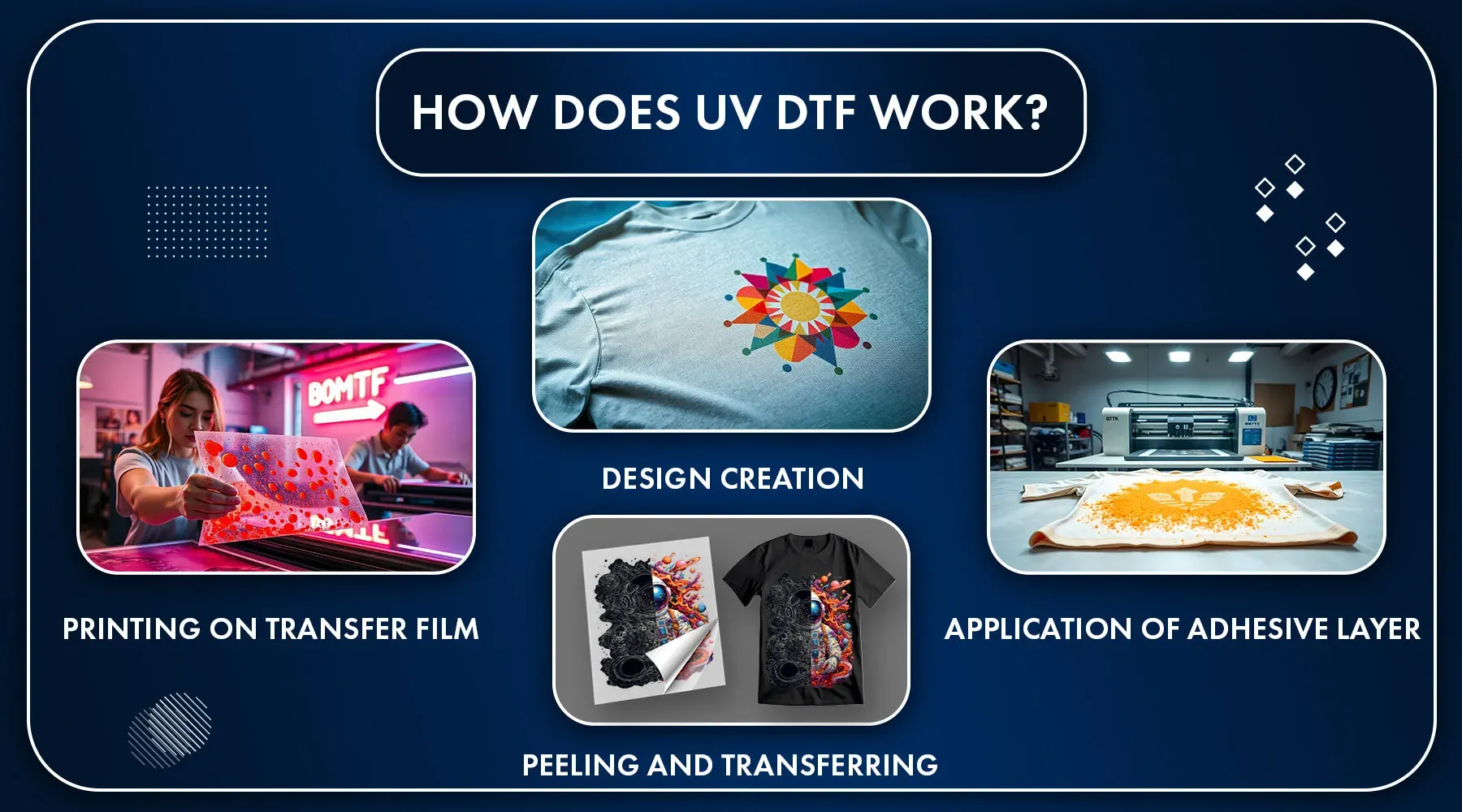
UV DTF transfer is redefining how teams move from concept to testable prototypes by combining UV-curable inks with a film-based transfer process that delivers reliable repeatability, tighter color control, and repeatable outcomes across multiple test runs. This approach speeds up iterations by enabling direct-to-film printing and a streamlined transfer workflow, a core benefit for fast prototyping teams working on tight schedules, while reducing waste and simplifying setup for creators, engineers, and marketers alike. The technique delivers vivid color, crisp detail, and durable finishes that support multi-material prototypes across textiles, plastics, and coated surfaces, expanding the range of materials you can validate in a single sprint and enabling more realistic user testing. Because curing can occur in tandem with the transfer, designers can print, test, and refine in the same day, shortening the feedback loop and reducing bottlenecks, while promoting cross-functional collaboration and faster decision-making. From fashion applications to branding proofs, this approach helps teams move ideas into tangible experiments with greater speed, closer market alignment, and improved stakeholder confidence as prototypes advance toward market readiness.
Alternative terms to describe the same process include UV-curable film transfer, UV-ink on film followed by a substrate bond, and a direct-film print-and-transfer workflow designed for swift iterations. In practice, this approach emphasizes rapid iteration cycles, enabling teams to visualize, test, and refine concepts as a cohesive workflow that bridges design and production. The method leverages a combination of film-based printing with ultraviolet curing to deliver fast color proofing, precise branding, and realistic finishes across a range of materials. This LSI-friendly framing highlights the value of an integrated print-and-transfer system that supports experimentation, reduces lead times, and enables cross-disciplinary collaboration. As a result, startups and established brands alike can validate form, fit, and function early, making it easier to align product concepts with market expectations before tooling.
Understanding UV DTF transfer for fast prototyping
UV DTF transfer combines UV-curable inks with Direct-to-Film printing to create vibrant designs intended for transfer onto a substrate. This approach is a cornerstone of fast prototyping because it shortens cure times and reduces bottlenecks in the design-to-prototype cycle. By leveraging DTF technology, teams can go from concept art to a physical sample more quickly, enabling rapid feedback on form, fit, and function.
With UV DTF transfer, you can print high-density color and fine details directly on a film, then transfer to textiles, plastics, and coated surfaces. This capability supports prototype manufacturing across a wide substrate range, from soft textiles to rigid boards, helping teams validate multi-material concepts early in the design process. The result is more iterations per sprint and a clearer path to market.
Speeding prototype manufacturing across substrates with UV DTF transfer
Substrate versatility is a key driver of efficiency in fast prototyping. UV DTF transfer performs well on textiles, coated plastics, metalized surfaces, and even rigid components, enabling side-by-side comparisons of different materials in the same workflow. This cross-material flexibility reduces tooling needs and accelerates decision-making in prototype manufacturing for products that blend textiles and plastics or metalized accents.
By enabling rapid hot-swapping of designs and colorways, teams can explore more variants within a single sprint. The ability to print, cure, and transfer in quick succession shortens iteration cycles and lowers risk associated with late-stage changes. In addition, the faster turnaround helps stakeholders see realistic finishes sooner, boosting confidence in the prototyping effort.
Optimizing color and detail with UV DTF direct-to-film printing
Direct-to-film printing with UV inks delivers strong color fidelity and sharp detail, which is crucial for convincing prototypes. Effective color management—calibrated profiles, gamut mapping, and predictable conversions between RGB and CMYK—ensures that screens and prototypes align with brand standards. This alignment is essential for early market validation and investor reviews in prototype manufacturing.
UV DTF technology also preserves fine elements like gradients, micro typography, and small logos, so you can trust that a sample will reflect the final aesthetic. The durable finish achieved during the transfer process supports realistic tactile testing and long-wear performance in early demonstrations. This level of detail helps teams validate user experience and branding before tooling.
Practical workflow for rapid prototyping with UV DTF transfer
A practical fast-prototyping workflow begins with a clear brief and scalable design assets. Start with vector artwork or high-res raster files, and plan color profiles that align with your UV printer and transfer film. Concept-to-prototype speed improves when you map out powders, curing steps, and transfer cycles in advance.
Next, manage the transfer stage with careful calibration: load the DTF film, adjust heat press settings, and synchronize curing with transfer. Printing on DTF film followed by powdering and curing (if needed) sets up a robust pipeline. Finally, transfer to substrate with precise alignment, then inspect adhesion, color accuracy, and hand feel, repeating as needed for fast iterations.
Real-world applications of UV DTF fast prototyping in fashion and packaging
Real-world applications showcase UV DTF fast prototyping across fashion, packaging, and multi-material assemblies. In fashion and wearables, designers can prototype graphic tees and jackets with authentic color reproduction and soft hand feel, enabling rapid validation with real athletes or influencers. For product packaging, quick transfers to cardboard, foam, or plastic surfaces help validate branding and consumer experience early in the design cycle.
Additionally, UV DTF transfers enable small-batch prototyping for startups who want to test market response without committing to costly tooling. Prototypes that blend textiles, plastics, and coated metals can be evaluated in a single sprint, reducing the number of separate processes and tools needed. This approach accelerates prototype manufacturing by shrinking lead times and keeping teams aligned around a common finish.
Best practices, limitations, and future outlook for UV DTF transfer in prototyping
Best practices for reliable, fast iterations focus on containment of variables: design with transfer margins, stabilize color early with baseline profiles, and optimize transfer parameters for each substrate. A library of test coupons and swatches supports quick validation of adhesion, color, and durability across materials.
While UV DTF transfer offers many advantages, be mindful of limitations such as substrate compatibility, tactile differences on fabrics, and per-unit cost for high-velocity prototyping. Document learnings and invest in color management and alignment tooling to minimize misregistration and edge issues. Looking ahead, ongoing improvements in curing speed, automation, and substrate compatibility will further compress iteration cycles and expand the role of UV DTF in prototype manufacturing.
Frequently Asked Questions
What is UV DTF transfer and how can it accelerate fast prototyping?
UV DTF transfer is a prototyping workflow that uses UV-curable inks for Direct-to-Film printing, followed by a transfer to the chosen substrate. This approach speeds up fast prototyping by reducing cure times and enabling same-day printing, testing, and reprints in prototype manufacturing. It also broadens substrate options, helping validate form, fit, and function quickly.
How does UV DTF transfer differ from traditional DTF technology for prototype manufacturing?
UV DTF transfer adds UV-curable inks that cure instantly, delivering faster drying, sharper color fidelity, and reduced bottlenecks compared with traditional DTF technology. The streamlined cycle—print, cure, transfer—fits the fast prototyping workflow and accelerates iterations in prototype manufacturing.
Which substrates are best for UV DTF transfer in fast prototyping?
UV DTF transfer is versatile across textiles, coated plastics, metalized surfaces, and rigid boards, enabling multi-material prototype manufacturing. This substrate versatility supports rapid design validation across textiles, plastics, and other materials, improving speed and accuracy in fast prototyping.
What role does direct-to-film printing play in UV DTF transfer for prototyping?
Direct-to-film printing deposits dense color and fine detail on the film, which is then transferred with UV-curable inks during the finish. This enables quick testing of logos, gradients, and typography and reduces wait times in prototype manufacturing.
What are best practices for reliable, repeatable UV DTF transfer during fast prototyping?
Develop clear color profiles and substrate-specific calibrations for UV DTF transfer; stabilize transfer parameters (temperature, pressure, time); use test coupons to validate adhesion and color; align media precisely during transfer; synchronize curing with the transfer step to minimize delays in prototype manufacturing.
What are common limitations of UV DTF transfer in fast prototyping and how can you mitigate them?
Common limitations include substrate compatibility, tactile hand on fabrics, higher per-unit costs, and a learning curve with UV DTF transfer. Mitigations include testing substrates early, adjusting transfer settings for each material, evaluating finish texture, budgeting for rapid iteration cycles, and documenting workflows to shorten the learning curve.
| Aspect | Key Point Summary | Impact on Prototyping |
|---|---|---|
| Prototyping speed | UV-curable inks dry instantly, reducing turnaround times. | Faster concept-to-prototype workflow; enables same-day iterations. |
| Color fidelity | Direct-to-film with UV inks preserves details and brand colors. | Early verification of aesthetics; reduces rework. |
| Substrate versatility | Works on textiles, plastics, metalized surfaces, and coated boards. | Supports multi-material prototyping; simulates real-world usage. |
| Iterative testing at scale | Rapid hot-swapping of designs and colorways. | Explore more variants per sprint; lower risk of early commitment. |
| Workflow steps | 7-step process from concept to transfer (concept/design, film prep, print, powdering, transfer, inspect, iterate). | Structured, repeatable pipeline with clear checkpoints. |
| Materials & equipment | UV-curable inks, DTF film, printer, curing hardware, heat press. | Essential toolkit; affects speed, durability, and finish. |
| Applications | Fashion/wearables, packaging proofs, mixed-material prototypes, small-batch testing. | Broad applicability for realistic concept validation. |
| Best practices | Design with transfer in mind; stabilize color; optimize parameters; validate durability. | Higher success rate and repeatability. |
| Limitations | Substrate compatibility varies; tactile feel can change; cost per prototype; learning curve. | Mitigate with testing, planning, and clear documentation. |
| Future trends | Faster curing, broader substrate support, improved color management, automated transfers. | Quicker iterations and easier scaling as tech matures. |
Summary
UV DTF transfer unlocks a new pace for product development by weaving together direct-to-film printing, UV-curable inks, and a fast, reliable transfer process. This approach shortens design cycles, accelerates validation, and makes it feasible to test form, fit, and function across textiles, plastics, and coated surfaces in the same sprint. By embracing a structured workflow, color management practices, and appropriate substrates, teams—from startups to established brands—can iterate quickly, gather meaningful feedback, and move confidently from idea to market-ready concept. As UV DTF transfer technologies mature, expect even faster cure times, broader substrate support, and more automated transfers that further compress development timelines.