
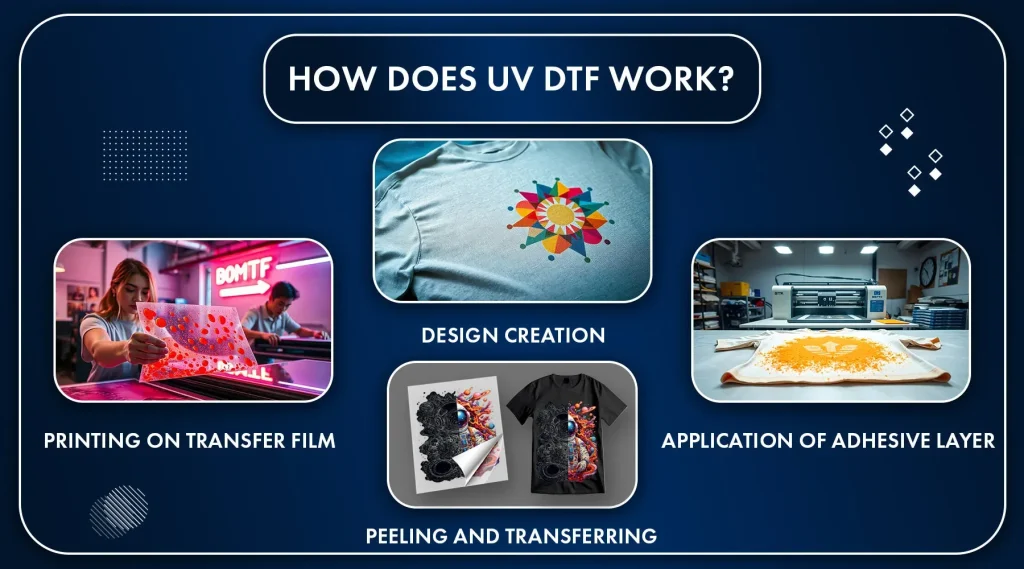
In today’s fast-moving apparel and merch world, UV DTF transfer is reshaping how brands deliver quick turnarounds, vibrant color, and durable wear. This method blends direct to film printing with UV-curable inks and a heat-press transfer, enabling efficient on-demand production. The approach delivers DTF printing benefits such as rapid curing, broad color gamut, and strong opacity on dark fabrics. It works across cotton, blends, and select synthetics, supporting scaling, customization, and consistent quality. Case studies show shortened lead times, reduced inventory risk, and helping brands stay competitive without sacrificing appeal.
From an engineering and marketing perspective, this modern digital decoration approach pairs film substrate with UV-curable inks for garments. Viewed through an LSI lens, the topic can also be described as on-demand textile printing using film-based media and UV inks that emphasize color fidelity, durability, and scalable runs. For brands, this falls into DTF transfer case studies and broader trends like UV printing on apparel, illustrating flexibility, reduced waste, and consistent results across fabrics. Design to delivery, the approach hinges on color management, validated heat settings, and robust adhesion, guiding decisions about substrates, inks, and equipment. By applying these insights, teams can choose the right balance of processes to support fast, accurate merch production at scale.
1. Understanding UV DTF Transfer: Technology, Process, and Benefits
UV DTF transfer combines direct-to-film technology with UV-curable inks and a heat-press transfer to fabric. The film is printed with a wide color gamut, then cured with UV light before being applied to garments. This approach leverages direct-to-film technology to deliver bold colors and fast turnaround, making it a compelling choice for on-demand production and customization.
From a practical standpoint, UV DTF transfer offers a suite of benefits that align with current apparel needs. The UV curing stage speeds up production by providing rapid ink set, while the resulting prints tend to exhibit strong color saturation and resistance to cracking through wash cycles. This makes it suitable for a range of fabrics—from cotton and blends to some synthetics—enabling scalable, high-quality results across diverse product lines.
2. Case Study Insights: DTF Transfer Case Studies that Drive Strategy
DTF transfer case studies reveal how brands achieve faster time-to-market, reduced waste, and greater design flexibility. For example, a streetwear brand replaced some screen-printed designs with UV DTF transfer to enable on-demand runs of 50 to 300 units, cutting lead times by about 40% and lifting average order value as rapid drops encouraged customer engagement.
In another case, a music tour merchandise partner used UV DTF transfer to maintain consistent color across batches and fabrics, delivering high-impact visuals that held up under repeated wear and washing. A sustainable brand showcased how shifting more designs to UV DTF transfer reduced water usage and chemical waste while preserving color fidelity, highlighting the technology as a strategic lever for responsible growth.
3. Why UV DTF transfer Excels for UV Printing on Apparel
For UV printing on apparel, the UV DTF transfer delivers exceptional color vibrancy and opacity, even on dark fabrics. The wide color gamut and robust saturation help graphics pop under direct light, contributing to reliable on-brand visuals across seasons. This makes it an attractive option for brands seeking bold, consistent prints without the extended setup associated with traditional methods.
Durability is another standout attribute. Prints produced via UV DTF transfer tend to resist cracking and fading through multiple wash cycles, ensuring that designs stay intact from the first wear to long-term use. The combination of durable ink film and careful curing supports reliable performance across diverse garment types and wearer activity.
4. Implementing Color Control and Fabric Testing for Consistency
Effective color management is essential when scaling UV DTF transfer. Building a color library with standard profiles tailored to a range of fabrics helps maintain consistency from batch to batch. Investing in color matching tools and consistent lighting for evaluation reduces variability and supports reliable reproduction across products and seasons.
Fabric compatibility testing is equally critical. By testing multiple blends, weights, and finishes, brands learn how the transfer adheres under stress and how fabric stretch affects placement and feel. Documenting procedures—from ink densities to heat press times—creates a repeatable framework that minimizes surprises as production scales.
5. Practical Roadmap to Adopt UV DTF Transfer
A practical adoption plan starts with a pilot program to validate workflows, ink densities, color calibration, and cure parameters. Establish a clear design-to-product workflow, including mockups, color proofs, and final print files, to minimize rework and speed decision-making.
Next, evaluate equipment options and build a scalable process. Choose printers with a wide color gamut, high resolution, and reliable UV curing, and pair them with heat presses that deliver precise temperature control and dwell times. Develop SOPs, define service level agreements, and set KPIs such as lead time, order accuracy, and wash-test outcomes to guide growth and ensure quality at scale.
6. Sustainability, Costs, and Growth with Direct-to-Film Technology
From an environmental perspective, shifting to UV DTF transfer can reduce water usage and chemical waste compared with traditional screen printing or dye-sub methods. Brands pursuing sustainable growth find this technology aligns with goals like lower environmental footprint, cleaner production processes, and responsible sourcing, while still delivering strong color fidelity.
Economically, the method supports cost flexibility for small runs and rapid prototyping, with a clear pathway to scale. Brands can analyze break-even points for runs of 25, 50, or 100 units and compare per-unit costs across methods. The result is a data-driven approach to expanding product lines, reducing inventory risk, and maintaining consistent quality across batches.
Frequently Asked Questions
What is UV DTF transfer and how does it work as a form of direct-to-film technology?
UV DTF transfer combines direct-to-film printing with UV-curable inks and a heat-press transfer. The film is printed with a wide color gamut, then a UV cure sets the ink before transferring to fabric, delivering rapid drying, strong color saturation, and durable prints across washes.
What are the DTF printing benefits of UV DTF transfer for brands seeking fast turnarounds and vibrant colors?
Key DTF printing benefits include shorter lead times and lower inventory risk through on-demand production, plus the ability to print vibrant colors on a wide range of fabrics, including dark garments, with reliable opacity and durable finishes.
How can UV printing on apparel with direct-to-film technology improve color accuracy on dark fabrics, according to DTF transfer case studies?
DTF transfer case studies show color accuracy on dark fabrics improves with careful color matching across batches and heat-press calibration in UV printing on apparel using direct-to-film technology.
What lessons do DTF transfer case studies offer for scaling UV DTF transfer in on-demand production?
Key lessons include starting with pilot runs to tune ink densities and heat times, building a robust color management library, testing fabric blends, documenting processes, and implementing rigorous quality control. For example, a streetwear case showed a 40% reduction in lead times and a 15% increase in average order value after adopting UV DTF transfer.
What are the essential steps to implement UV DTF transfer using direct-to-film technology for apparel?
Define your design workflow, conduct substrate testing across fabrics, establish color management with reusable profiles, set up a QA plan, evaluate equipment (wide gamut printers and reliable UV curing), run a pilot program, and track KPIs such as lead time and wash performance.
How does UV DTF transfer align with sustainability goals in apparel production, as shown by case studies?
UV DTF transfer can reduce water usage and chemical waste compared with traditional screen printing or dye sublimation, and on-demand production lowers inventory waste. Case studies of sustainable brands show lower environmental footprint while maintaining color fidelity and durability.
| Topic | Key Points |
|---|---|
| Introduction |
|
| What is UV DTF Transfer? |
|
| Why UV DTF Transfer Appeals to Brands |
|
| DTF Transfer Case Studies: Three Brands Succeeding |
|
| Lessons Learned and Best Practices |
|
| Best Practices for Implementing UV DTF Transfer in Your Brand |
|
Summary
UV DTF transfer has emerged as a transformative option for brands seeking speed, color fidelity, and on-demand production. The case studies show how streetwear, tour merch, and sustainable lines can leverage this technology to shorten lead times, optimize costs, and deliver consistent, vibrant prints across diverse fabrics. By applying the lessons learned and following best practices for pilots, color management, and workflow design, brands can build a scalable UV DTF transfer program that meets customer expectations and supports sustainable growth.